One Medium Was Never Going to Be Enough: Inside the Rise of the Multi-Disciplinary Artist

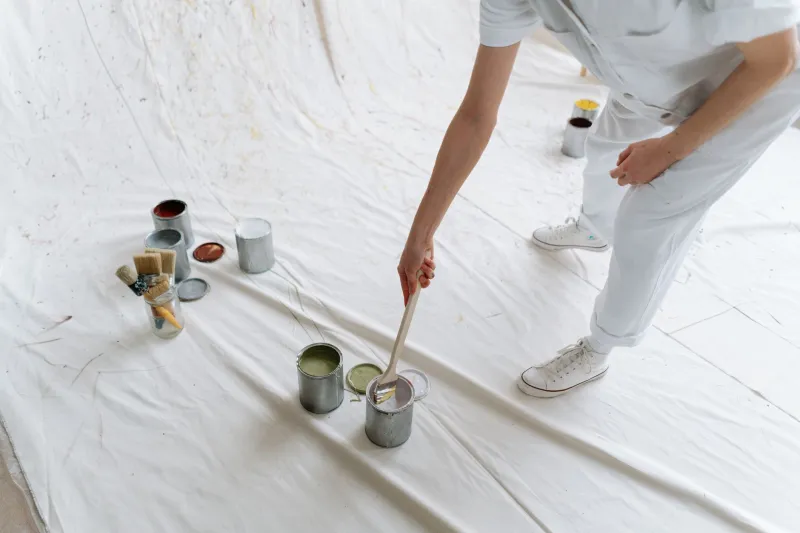
Photo by Photo by Dillon Wanner on Unsplash on Unsplash
For a long time, the advice given to emerging artists was remarkably consistent regardless of discipline: pick your lane and stay in it. Develop a signature style. Build a recognizable body of work. Become known for one thing and become known for it well.
That advice made a certain kind of sense in a certain kind of creative economy. Gallery representation favored coherent, categorizable bodies of work. Record labels wanted artists who fit a format. Agents booked performers who were easy to pitch.
The creative economy has changed. And the artists adapting fastest to that change are the ones who never quite fit the one-thing model to begin with.
The Specialization Myth
The idea that great artists specialize is actually more recent than it sounds. For most of human history, the separation between visual art, music, performance, and craft was far less rigid than the modern art world made it. The Renaissance ideal of the uomo universale—the complete person fluent across disciplines—was aspirational precisely because cross-medium mastery was understood as a mark of genuine creative depth, not dilettantism.
Somewhere between that and the professionalization of the arts in the twentieth century, specialization became the norm. Institutions required it. Markets rewarded it. The infrastructure of the art world was built around categories.
But artists have always pushed against categories, and the current moment is producing a particularly visible wave of multi-disciplinary practitioners who are finding that their refusal to specialize isn't a liability—it's the thing that makes them interesting.
What Cross-Medium Fluency Actually Creates
The argument for specialization was always about depth. Go deep enough in one medium and you'll find things that generalists miss. That's still true. But what's becoming equally clear is that crossing between disciplines creates a different kind of depth—one that comes from translation rather than excavation.
An artist who works in both sculpture and sound design brings a spatial intuition to audio that a musician who's never worked in three dimensions simply doesn't have. A choreographer who also paints thinks about bodies in space differently than one who's only ever worked in movement. A visual artist who performs brings an understanding of duration and audience presence to their gallery work that changes how they construct an experience.
These aren't superficial crossovers. They're genuine cognitive and creative advantages that produce work that doesn't look like anything else in the room.
Take the growing number of artists working across digital installation, performance, and sound—a combination that didn't have a name or a market category fifteen years ago and now has dedicated festivals, curatorial frameworks, and collectors specifically seeking it out. The artists who built practices in that space didn't do it by following a roadmap. They did it by following what interested them across disciplines until the intersections became their medium.
The Revenue Case for Multiple Mediums
Beyond the creative argument, there's a straightforward economic one. A single-medium practice in today's fragmented creative economy is a single revenue stream, a single audience, and a single point of failure.
A visual artist who also performs has gallery sales and booking fees. A musician who also creates visual work has streaming revenue, live show income, and art sales—plus licensing opportunities that open up when a single buyer can commission both an original score and a visual installation from the same artist.
The multi-disciplinary creative isn't spreading themselves thin. They're building a creative infrastructure that doesn't collapse when one part of the market shifts.
And the market shifts constantly. Artists who were entirely dependent on live performance income in early 2020 learned this lesson in the most brutal possible way. The ones who had already developed parallel practices in visual work, digital content, or teaching had somewhere to go. The ones who hadn't were starting from zero.
The Brand Question
The concern that gets raised most often about multi-disciplinary practice is the brand problem. If you do too many things, how does anyone know what you are? How do you market yourself? What's your pitch?
It's a fair question, and it's one that multi-disciplinary artists navigate with varying degrees of success. The ones who do it well tend to have a clear answer to a different question: not what do I make but what am I interested in.
When the through-line is a consistent set of obsessions, themes, or questions rather than a consistent medium, the brand coherence takes care of itself. An artist whose work—whether it's painting, performance, or digital installation—consistently explores the relationship between memory and physical space has a clear identity even without a single discipline to hang it on.
Audiences are actually quite good at tracking artists rather than formats. What they follow is a sensibility, a voice, a way of seeing. A multi-disciplinary artist who has a strong enough voice can move between mediums without losing the thread.
The Institutional Catch-Up
One place where multi-disciplinary artists still face friction is in the institutions that were built around categories. Grant applications often ask you to identify your discipline. Residency programs are structured around specific mediums. Arts journalism tends to cover painters separately from musicians separately from performers.
That infrastructure is changing, but slowly. Artists navigating it successfully tend to be strategic about how they present themselves in different contexts—not hiding the full scope of their practice, but leading with what's most relevant for each opportunity.
The artists who struggle are often the ones who try to present everything at once to every audience. The ones who thrive understand that being multi-disciplinary doesn't mean being undefined. It means being fluent in multiple languages and knowing which one to speak in which room.
The Generation That Doesn't See the Walls
There's a generational dimension to this shift that's worth naming. Artists who grew up making things on the internet—where a single creator can be simultaneously a visual designer, a writer, a video producer, and a musician—don't experience disciplinary boundaries the way older creative institutions do.
For a twenty-five-year-old artist who built their practice on YouTube, TikTok, and Bandcamp, the question "but what kind of artist are you?" can feel genuinely confusing. They're the kind of artist who makes what they make. The medium is whatever the idea requires.
That orientation isn't carelessness. It's a different relationship to the question of creative identity—one that may be better suited to an era where audiences are fragmenting, platforms are multiplying, and the most distinctive voices are the ones that can't be easily categorized.
The single-medium artist isn't going anywhere. There will always be painters who only paint and musicians who only make music, and the depth of that singular focus will always produce work that matters.
But the creative economy has room now—more room than it's had in decades—for the artist who needs more than one medium to say what they have to say. And increasingly, those are the artists whose work is hardest to ignore.