Likes Don't Pay Rent: How Visual Artists Are Escaping the Social Media Trap
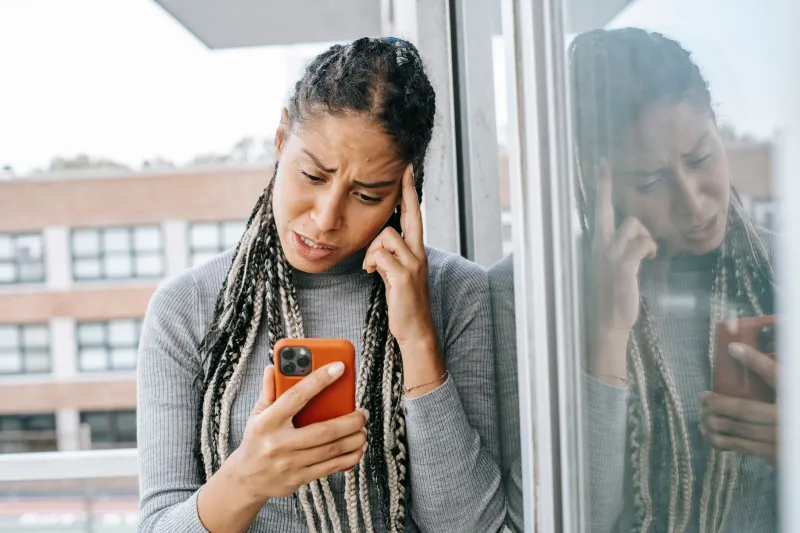
There's a particular kind of frustration that a lot of working artists know intimately. You spend three weeks on a painting — layering, refining, stepping back, starting over. You photograph it perfectly, write a thoughtful caption, post it on Instagram, and wait. It gets 47 likes. Meanwhile, a 15-second video of someone doing a speed-paint of a cartoon character gets 2 million views before lunch.
This isn't an accident. And it's not a reflection of talent.
It's the algorithm — and it was never really designed with artists in mind.
What Algorithms Actually Reward
Here's the uncomfortable truth: TikTok, Instagram, and even YouTube Shorts are engagement machines. Their entire business model depends on keeping users scrolling, tapping, and watching as long as possible. The content that wins is content that generates fast, measurable reactions — comments, shares, saves, watch-time completion rates.
A lot of visual art just doesn't work that way. A sculptor's finished bronze piece is stunning in person and beautiful in a photograph, but it doesn't make someone stop their scroll the way a trending audio clip does. A painter's nuanced color study doesn't lend itself to a punchy hook. And a theater performer's most emotionally resonant moment — the kind that makes an audience sit in silence — is nearly impossible to capture in a clip short enough to hold a distracted viewer's attention.
Platforms have quietly shifted their algorithms to prioritize video content, particularly short-form video, over static images. Instagram's own executives have admitted publicly that the platform is "no longer a photo-sharing app." For visual artists whose entire medium is the static image, that's not just an inconvenience — it's a structural disadvantage baked into the system.
The Follower Count Illusion
Ask any working artist in the US about their social media following and you'll likely hear some version of the same story. Numbers that looked promising two or three years ago now translate into almost no organic reach. Posts that once reached 40 or 50 percent of followers now land in front of maybe 5 or 6 percent — unless you pay to boost them.
Mia Ferrante, a Brooklyn-based oil painter who has been building her audience online since 2018, describes it bluntly: "I have almost 11,000 followers on Instagram. On a good week, maybe 600 of them see anything I post. And the posts that actually perform? They're never my best work. They're the ones where I accidentally caught good lighting on a reel."
That gap between follower count and actual visibility is where a lot of artist careers quietly stall. The metrics look decent on paper, but the real-world impact — inquiries, commissions, gallery interest, ticket sales — doesn't follow.
For performing artists, the situation has its own specific wrinkles. A dancer who builds a TikTok following based on trending audio and viral choreography may find that their audience has zero interest in purchasing tickets to an actual performance. The algorithm connects them with viewers who want entertainment in a specific format, not necessarily fans who will show up and support the broader work.
The Discoverability Myth
One of the most persistent promises of social media has been discoverability — the idea that any artist, anywhere, could reach a global audience without needing a gallery, a label, or an agent. That promise wasn't entirely false, but it came with terms and conditions nobody read carefully.
Discoverability on these platforms is increasingly pay-to-play, trend-dependent, or both. Artists who go viral often do so accidentally, around content that has little to do with their actual practice. And the audiences they gain from that moment of virality are notoriously difficult to convert into long-term supporters.
Jordan Kessler, a ceramicist based in Asheville, North Carolina, had a piece go unexpectedly viral on TikTok last year — a time-lapse of him throwing a particularly large vessel. It got shared widely, his follower count jumped by nearly 8,000 in a week, and then... almost nothing. "People loved watching the process," he says. "But when I posted the finished piece for sale the next day, it sold to someone who'd been following me for two years. None of the new followers bought anything. Most of them unfollowed within a month."
What Artists Are Doing Instead
The good news is that a growing number of US-based artists are quietly building something more durable than a follower count. They're treating social media as a top-of-funnel awareness tool — useful for visibility, but not the foundation of their business.
Email lists have made a serious comeback in artist communities. Platforms like Mailchimp, Substack, and Flodesk let artists communicate directly with people who have actively opted in to hear from them. No algorithm decides who sees the message. No platform can throttle the reach. Several painters and illustrators have reported that their email lists, even with subscriber counts in the hundreds, consistently outperform their social media accounts in terms of actual sales and engagement.
Patreon and direct membership models are another growing strategy. Artists offer tiered access to their process — early looks at new work, behind-the-scenes content, exclusive prints or downloads — in exchange for monthly support. It's a model that rewards depth of connection over breadth of reach.
And some artists are going even more local. Partnering with independent coffee shops, co-working spaces, and community organizations for small shows and pop-up events. Building relationships with collectors and supporters face-to-face, in cities and neighborhoods where they actually live. It's old-school in the best possible way.
The Real Metric That Matters
None of this means artists should abandon social media entirely. It still has genuine utility — for reaching new people, for staying visible in a crowded landscape, for connecting with other creatives and potential collaborators. But it's worth being clear-eyed about what it can and can't do.
The algorithm doesn't know art. It knows engagement. It knows watch time and share rates and comment velocity. It doesn't know the difference between something made with genuine craft and something assembled to chase a trend. It can't tell the story of why a piece matters.
Only artists can do that. And the more directly they can tell that story — to people who actually want to hear it — the less they have to depend on a platform that was never really on their side to begin with.
At Rey Artists, we believe the most powerful creative careers aren't built on follower counts. They're built on real relationships between artists and the people who genuinely love their work. That's a connection no algorithm can manufacture — and none can take away.