Clay, Canvas, and Control: Why Gen Z Is Falling Back in Love With Making Things by Hand
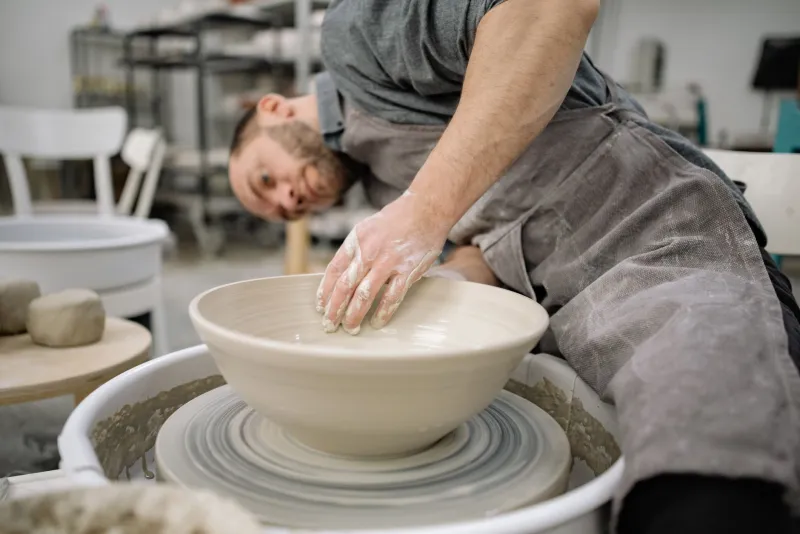
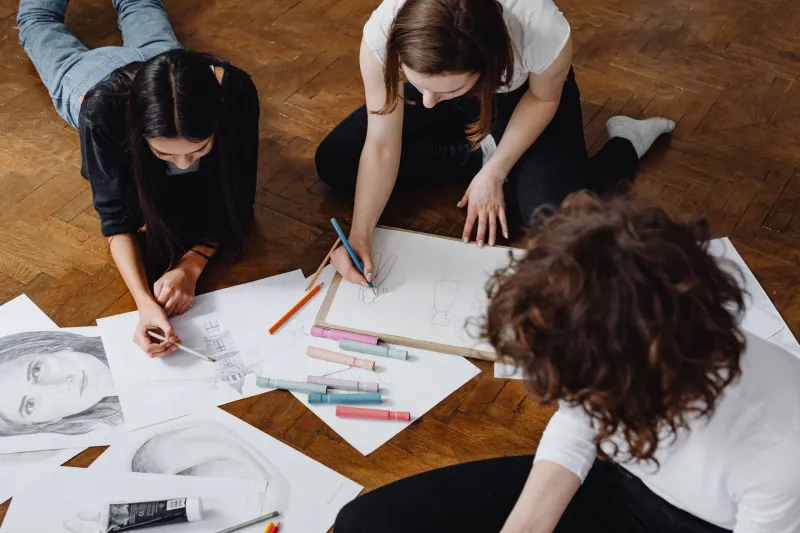
There's something almost rebellious about the smell of linseed oil in a world that runs on Wi-Fi. Walk into any shared studio space in Brooklyn, Chicago's Pilsen neighborhood, or East Austin on a Saturday afternoon, and you'll find twenty-somethings hunched over pottery wheels, pulling prints from ink-covered presses, and stretching their own canvases — often with a phone propped nearby, but not for scrolling. It's for documentation. The work itself? That's entirely analog.
This isn't nostalgia. It's something more intentional.
Burned Out by the Algorithm
For a generation that grew up digitally fluent, the appeal of traditional mediums runs deeper than aesthetic preference. Many Gen Z artists describe a kind of creative exhaustion that set in after years of producing content calibrated for engagement — optimized thumbnails, trending audio, posts timed to peak traffic windows.
"I was making digital illustrations and posting constantly, but I started to feel like I was working for the platform, not for myself," says Maya Reyes, a 23-year-old mixed-media artist based in Philadelphia. "The moment I picked up a linocut block, something clicked. Nobody was watching. There were no metrics. It was just me and the material."
That sense of friction — the resistance of real materials, the irreversibility of a brushstroke, the weight of a ceramic piece in your hands — is exactly what's drawing younger creators back to the studio. After years of infinite undo buttons and AI-assisted tools, the commitment required by analog work feels less like a limitation and more like a feature.
Community Spaces Are Fueling the Fire
The resurgence isn't happening in isolation. Across the country, a network of community studios, co-ops, and makerspace hybrids is giving Gen Z artists access to equipment and mentorship that would otherwise be out of reach.
Places like Choplet in New York City, Watershed Center for the Ceramic Arts in Maine, and Spudnik Press Cooperative in Chicago have seen notable upticks in younger members over the past few years. These aren't just facilities — they're ecosystems. You show up to use the kiln and end up in a three-hour conversation about glaze chemistry with someone twice your age who's been throwing pots since before you were born.
"The intergenerational thing is huge," says Jordan Park, a 25-year-old printmaker from Los Angeles who recently joined a collective studio in Highland Park. "I'm learning techniques from artists who've been doing this for decades, and they're genuinely curious about how I'm using social media to sell prints. It goes both ways."
That exchange — old craft knowledge meeting new distribution savvy — is one of the most compelling dynamics of this movement.
Not Anti-Digital. Just Intentionally Analog.
Here's what makes this generation different from earlier back-to-basics movements: they're not abandoning digital tools altogether. They're drawing a deliberate line between making and marketing.
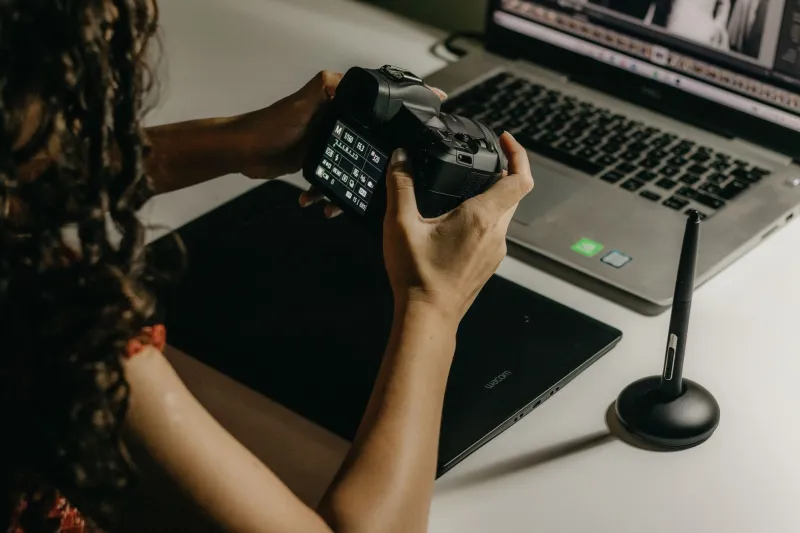
Maya photographs her linocut prints with careful lighting and posts them on Instagram. Jordan uses Etsy and Shopify to sell limited-edition runs. Others use TikTok to document their studio process — not as content creators chasing views, but as artists letting people in on the work. The algorithm is a tool they use. It's not the boss anymore.
"I think of social media as my storefront, not my studio," says Camille Torres, a 22-year-old ceramicist in Denver whose functional pottery has built a quiet but loyal following online. "What happens in the studio is mine. What I choose to share is the conversation I'm having with the world."
This separation of creative space from promotional space is a psychological shift as much as a practical one. It's also, arguably, producing better work — pieces made without an audience in mind tend to carry a different kind of authenticity.
The Economics of Making Things
Of course, loving clay doesn't pay the rent. One of the more practical aspects of this movement is watching how these artists are building sustainable models around traditional work.
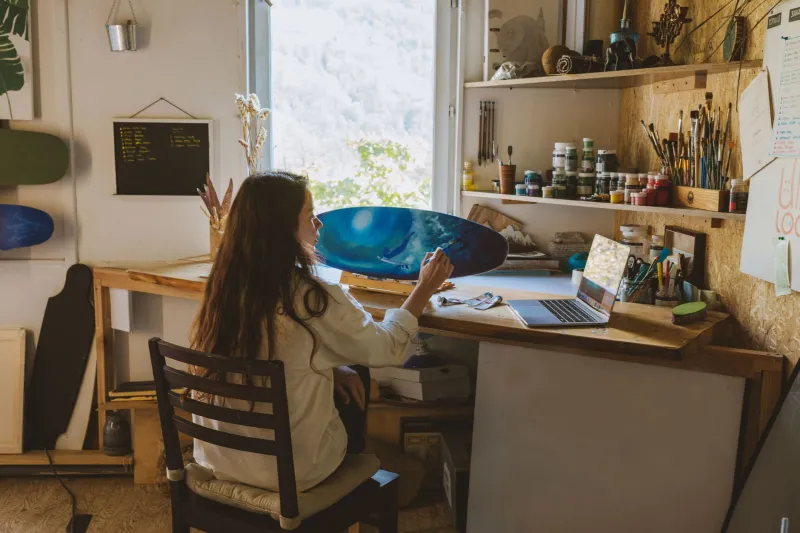
Ceramic artists sell functional ware alongside one-of-a-kind pieces, creating accessible price points that draw in buyers who might not consider themselves art collectors. Printmakers offer both original prints and high-quality reproductions, scaling their work without compromising the handmade ethos. Painters teach weekend workshops out of the same studios where they create, turning their practice into a community hub.
The key, most of them say, is owning the relationship with their audience directly — no gallery middleman, no platform taking a cut of every sale beyond a reasonable processing fee.
"I did the gallery route for about six months," says Jordan. "I got one show, sold a few pieces, and saw maybe thirty percent of what they went for. Now I sell directly through my website and at art markets. I make less per piece sometimes, but I keep more, and I actually know who's buying my work."
Why It Matters Right Now
There's a broader cultural conversation happening underneath all of this. As AI-generated imagery floods digital spaces and the line between human-made and machine-made art grows blurrier by the month, work that carries the evidence of a human hand — the slight imperfection of a thrown bowl, the ink variation of a hand-pulled print, the visible brushwork in a painting — carries a different kind of weight.
For Gen Z artists, traditional mediums aren't a retreat from the future. They're a statement about what they value in it: process, presence, and the irreplaceable mark of a person who made something real.
And honestly? That feels like exactly the kind of creativity worth putting center stage.