Running on Empty: What the Hustle Culture Is Really Costing Creative Professionals
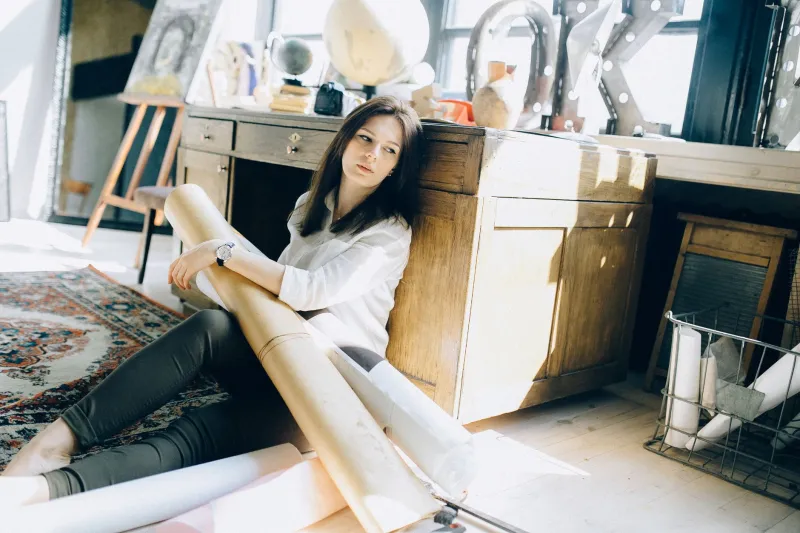
There's a particular kind of exhaustion that doesn't show up in your body first. It shows up in your sketchbook staying closed for three weeks. It shows up in the way you open a blank canvas and feel absolutely nothing. It shows up when a project you would have once been thrilled to land suddenly feels like a weight around your neck.
That's burnout. And in the US creative industry right now, it's everywhere.
The pressure to keep producing — to post, to pitch, to update your portfolio, to apply for every grant, to stay relevant on every platform — has become so normalized that many artists don't even recognize when they've crossed the line from ambitious to depleted. They just assume something has gone wrong with them personally. Spoiler: it hasn't.
The Machine That Never Sleeps
Let's be honest about what modern creative life actually demands. Visual artists aren't just making work anymore — they're photographing it, editing it, captioning it, tagging it, engaging with comments, tracking analytics, and trying to reverse-engineer why last Tuesday's post performed better than this one. Performing artists are rehearsing, self-producing, building email lists, chasing venue relationships, and submitting to festivals with application windows that seem designed to overlap with every other deadline on earth.
And underneath all of it is a hum of low-grade anxiety: Am I doing enough? Is someone else doing more?
A 2022 study published in the Journal of Occupational Health Psychology found that creative workers report significantly higher rates of emotional exhaustion than workers in other fields — not because creativity itself is draining, but because the industry infrastructure surrounding it is relentless. The problem isn't your passion. It's the system you're trying to operate inside.
In the US specifically, artists face a cultural context that makes this worse. The American mythology of the self-made success story is deeply embedded in how we talk about art careers. "Struggling for your craft" gets romanticized. Rest gets coded as laziness. Taking a break feels like falling behind, even when your nervous system is clearly waving a white flag.
What Burnout Actually Looks Like for Artists
Burnout isn't always dramatic. It doesn't always look like a breakdown or a public spiral. For a lot of artists, it looks quieter and more insidious than that.
It might look like creative avoidance — finding every reason not to sit down and make the work you used to love. It might look like finishing projects but feeling nothing when they're done. It might look like a creeping cynicism about the industry, the audience, or your own ability to ever make something that matters.
Dr. Christina Maslach, whose research at UC Berkeley essentially defined the modern understanding of burnout, identified three core components: exhaustion, depersonalization (feeling detached from your work and the people around you), and a reduced sense of personal accomplishment. Sound familiar? For artists, that third one hits particularly hard. When your identity is bound up in what you create, feeling like your work isn't good enough — or isn't landing — doesn't just feel like professional disappointment. It feels like a verdict on who you are.
The Permission Problem
Here's the thing nobody tells you: rest is not the opposite of productivity. For creative work specifically, it's a prerequisite for it.
Neuroscience research on what's called the default mode network — the part of your brain that activates during rest, daydreaming, and unstructured time — suggests that this "idle" state is actually when the brain does some of its most important connective work. Ideas that seemed stuck during focused effort suddenly click into place during a walk, a nap, or a quiet Saturday morning with nowhere to be. Artists have known this intuitively for centuries. Science is just catching up.
But knowing it intellectually and actually giving yourself permission to rest are two very different things. Especially when your Instagram feed is full of peers who appear to be grinding nonstop. (They're not, by the way. The algorithm rewards output, not honesty.)
So what does sustainable creative practice actually look like in practice?
Building a Career That Doesn't Eat You Alive
Treat your energy like a budget, not a bottomless account. High-output periods are fine — and sometimes necessary — but they need to be followed by genuine recovery, not just slightly-less-intense output. Plan for it. Block it on your calendar the same way you'd block a deadline.
Get strategic about what you say yes to. Not every opportunity is worth the cost. Before you commit to the next residency application, gallery submission, or collab pitch, ask yourself honestly: do I have the bandwidth for this right now, or am I saying yes because I'm afraid of what saying no means? (We've written about this before — the power of a well-placed no is real.)
Separate your identity from your output. This is the hardest one, and it's long-term work. Your worth as a human being is not determined by how productive your last quarter was. Your creative voice doesn't disappear when you take a month off. In fact, it often comes back stronger.
Find community with people who get it. Isolation amplifies burnout. Connecting with other artists — not to compare metrics, but to actually talk about the experience of making work and sustaining a career — is genuinely protective. Artist collectives, peer groups, and informal networks aren't just professionally useful. They're emotionally essential.
Talk to someone outside the industry. Therapists who specialize in creative professionals exist, and they're worth seeking out. The specific pressures of an arts career — financial instability, identity-work entanglement, public criticism — are not things a general career counselor is necessarily equipped to address.
The Long Game
The artists who build careers that last decades aren't the ones who burned brightest and fastest. They're the ones who figured out how to keep showing up — not just for the big moments, but for the ordinary Tuesday when no one's watching and the work still needs to get done.
That kind of longevity requires something the hustle culture actively discourages: treating yourself like a person, not a content machine.
You got into this because making things matters to you. Because art — whether it's painted, performed, photographed, or sculpted — is how you process being alive. That impulse deserves to be protected. Not just for your career's sake, but for yours.
Rest isn't quitting. It's how you make sure you're still here for the work that hasn't been made yet.