Stop Measuring Your Canvas Against Theirs: Breaking Free From the Comparison Spiral
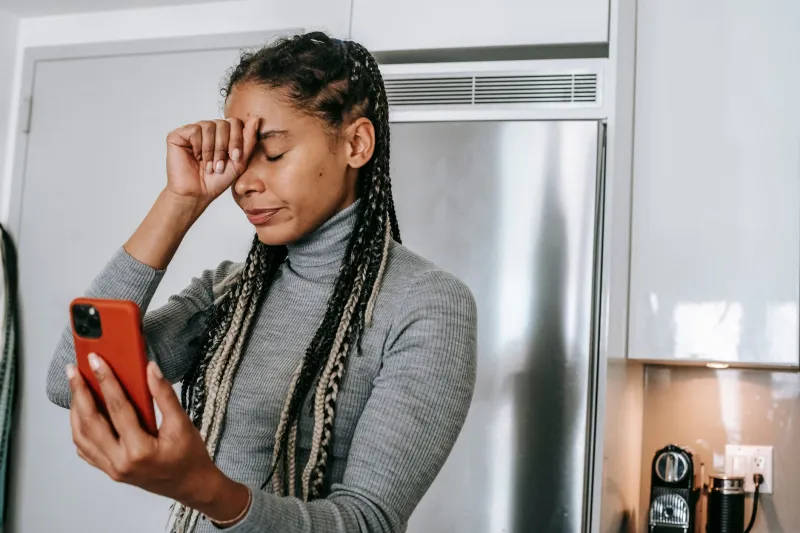
It usually starts innocently enough. You're winding down after a long session in the studio, phone in hand, just casually scrolling. Then you land on that account — the painter with the gallery show in Brooklyn, the choreographer with the viral reel, the muralist who just got commissioned by a brand you've been pitching for two years. And just like that, the work you were proud of an hour ago feels like a rough draft.
Welcome to the comparison trap. It's not a new problem, but the sheer volume of other people's highlights that artists consume daily has turned a manageable creative challenge into something that's genuinely reshaping how people make art — and more worryingly, whether they keep making it at all.
What's Actually Happening in Your Brain
Comparison isn't just an emotional response. It's a cognitive one, and it's deeply wired into how humans assess their own progress. Psychologists call it social comparison theory — the idea that we naturally evaluate our abilities and achievements by stacking them up against others. The problem is that our brains weren't designed to process the volume of comparison opportunities that a single Instagram scroll delivers.
For artists specifically, this creates a compounded effect. You're not just comparing outcomes — you're comparing process, aesthetic, recognition, follower counts, exhibition history, and perceived momentum all at once. And you're doing it against people who are almost certainly presenting a curated version of their journey, not the whole messy truth of it.
The result? A distorted internal scorecard that has almost nothing to do with where you actually are in your creative development.
Why Visual and Performing Artists Get Hit Harder
Not every profession takes the same hit from comparison culture. A software developer can quietly iterate without their work being publicly visible at every stage. An artist rarely gets that luxury.
Visual artists deal with the constant visibility of finished work — and only finished work. Nobody posts the studies that didn't land, the color palettes that got scrapped, or the pieces that lived under a drop cloth for six months. What you see is the highlight reel of someone's practice, presented as if it emerged effortlessly.
For performing artists, it cuts even deeper. Dancers, musicians, and actors don't just compare their work — they compare their bodies, their voices, their presence. When your instrument is yourself, watching someone else perform with what feels like effortless command can make you question your own fundamentals in ways that go well beyond craft.
And the gallery world doesn't help. Walking through a group show or an art fair and watching where the red dots appear, noticing which artists the collectors gravitate toward — that's a live-action comparison engine with real stakes attached.
The Shrinking Effect
Here's what nobody talks about enough: comparison doesn't just make you feel bad. It actively changes what you make.
When you're in a constant state of measuring your work against someone else's, you start unconsciously editing your instincts. You second-guess the weird choice, the unexpected color, the unconventional structure — because somewhere in the back of your mind, you're asking whether they would do it this way. You start chasing an aesthetic that isn't yours. You play it safe.
This is the real cost. It's not the bad mood after a scroll session. It's the slow erosion of the creative voice that made your work interesting in the first place.
Some artists describe it as their work getting "tighter" — not in a refined, disciplined way, but in a constricted, fearful way. The spontaneity drains out. The risk-taking stops. And paradoxically, the work becomes less competitive, not more, because it's lost the thing that made it distinctly yours.
Recalibrating Without Checking Out
The answer isn't to go offline or wall yourself off from the art world. That's both unrealistic and counterproductive — community, inspiration, and staying current all matter. But there are real, practical ways to change your relationship with what you're consuming.
Audit your feed with intention. There's a difference between following artists who genuinely inspire you and following artists who make you feel inadequate. Both might produce great work, but they're doing very different things to your creative headspace. Be honest about which is which, and adjust accordingly. This isn't about avoiding excellence — it's about curating what you let into your mental workspace.
Separate admiration from measurement. You can love someone's work without using it as a benchmark for your own. Practice noticing what you appreciate about another artist's output — the technique, the concept, the storytelling — without immediately running it through the filter of how does mine compare? These are two completely different cognitive acts, and you can train yourself to do the first without automatically triggering the second.
Create a personal baseline. Instead of measuring against other artists, measure against your own previous work. Pull out something you made a year ago, two years ago, five years ago. That's your actual progress line. It's the only one that tells a true story about your development.
Go back to private making. Dedicate some portion of your practice — even just a few hours a week — to work that isn't for an audience. No posting, no sharing, no feedback loop. Work made purely for the process of making it tends to reconnect you to the instincts that comparison culture quietly buries.
Talk to artists you trust about the real stuff. The antidote to the curated highlight reel is honest conversation. When you start hearing about the rejected grant applications, the shows that flopped, the pieces that took thirty attempts to get right — the distorted picture starts to correct itself. Find your people and have the real conversations.
The Longer Game
Here's something worth sitting with: the artists who tend to build genuinely lasting careers — the ones whose work keeps evolving, keeps surprising people, keeps mattering — are almost universally the ones who stayed in their own lane. Not because they were oblivious to what was happening around them, but because they figured out how to stay curious about other people's work without letting it colonize their own creative process.
Your art has a specific gravity to it. A specific voice, a specific set of preoccupations, a specific way of seeing. That's not a limitation — it's the whole thing. It's what makes your work yours and nobody else's.
Every hour you spend measuring your canvas against someone else's is an hour you're not developing the thing that actually makes you worth watching. And that, more than any gallery placement or follower count, is what builds a career that lasts.
The world doesn't need another version of the artist you've been comparing yourself to. It already has one of those. What it doesn't have yet is the fullest, most unguarded version of you.