Behind the Work: Why Your Studio Itself Has Become Your Most Powerful Portfolio Piece
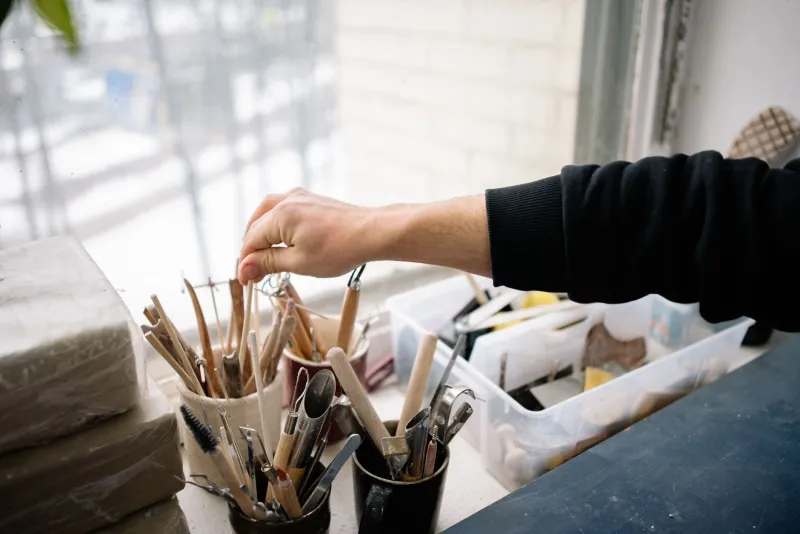
Walk into any serious artist's studio and you'll find something that no finished piece can fully communicate: the evidence of how they think. The pinned references. The half-finished experiments stacked against the wall. The tools arranged in a way that only makes sense to the person who uses them. The coffee cup that's been there so long it's practically a permanent fixture.
For a long time, that world stayed private. The studio was the backstage—the place where the real work happened before the presentable version was carried out into the light.
That dynamic has shifted in ways that are reshaping how artists build audiences, attract opportunities, and establish their identities in a crowded creative landscape.
The Studio as Extension of the Work
Something interesting happens when artists start sharing their workspaces with any degree of consistency: audiences start reading the space as part of the artistic statement.
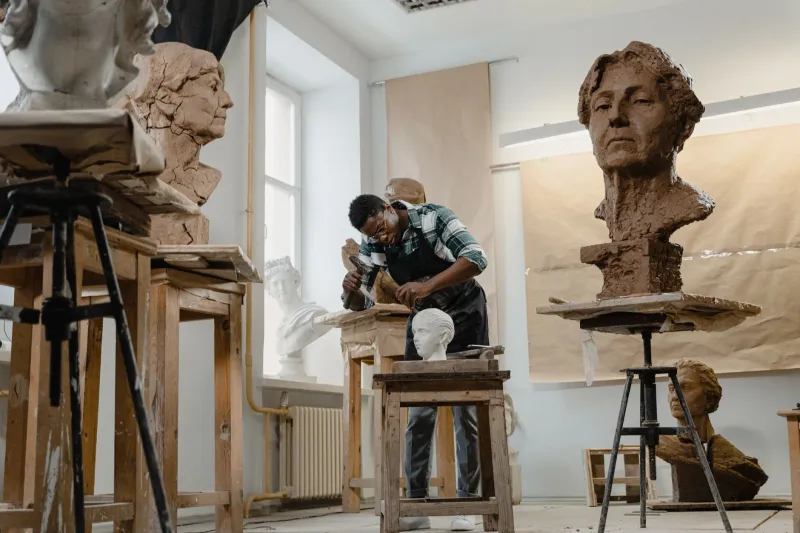
This isn't accidental. The environment where creative work happens reflects the values, aesthetics, and obsessions of the person who made it. A sculptor's studio littered with found industrial materials tells you something about her process that a finished bronze never could. A musician's home setup—the specific gear, the acoustic treatment, the handwritten notes on the wall—communicates an entire philosophy before a single note plays.
Audiences, especially the kind who become genuinely invested in an artist's work, are hungry for this kind of context. They're not just looking at what you made. They're trying to understand how you think. The studio is the most direct answer to that question you can offer.
Transparency as a Trust-Building Tool
There's a broader cultural current running through this. Across industries, American consumers and audiences have developed a strong preference for transparency—for seeing behind the curtain, understanding the process, and connecting with the person rather than just the product.
For artists, this creates a genuine opportunity. The studio tour—whether it's a casual Instagram story, a longer YouTube walkthrough, or a carefully shot photo series—functions as an authenticity signal in a market flooded with polished, finished-product-only presentation.
What it communicates is: I'm not hiding anything. Here's where this comes from. Here's the mess it requires. That kind of openness builds trust faster than almost any other approach, and trust is the foundation of every lasting creative relationship—with collectors, with collaborators, with fans.
The artists who do this well aren't necessarily sharing everything. They're making deliberate choices about what to show and how to show it. But the overall effect is one of genuine access, and audiences respond to that.
The Physical Space as Brand Statement
There's also a more strategic dimension to all of this. For artists building a recognizable creative identity, the studio environment is a controlled branding opportunity—maybe one of the most powerful ones available.
Think about what a consistent visual language across your studio documentation communicates: the palette of colors in your space, the way you organize materials, the aesthetic of your tools and surroundings. If your work is spare and geometric, a studio filled with clean surfaces and precise arrangements reinforces that identity. If your work is maximalist and layered, a richly cluttered space full of references and experiments tells the same story.
Some artists are extremely thoughtful about this alignment. Others discover it naturally as they start paying attention to how their space reads on camera. Either way, the result is a coherent visual world that extends beyond the finished work and into the life around it.
For working artists in cities like Brooklyn, Los Angeles, Chicago, or anywhere in between, where the creative economy is dense and competitive, that kind of coherence is a differentiator. It makes you memorable in a way that a great portfolio alone often doesn't.
Teaching Through the Space
One of the more interesting things happening right now is the way studio documentation is evolving into a form of education—and how that educational content is becoming a career asset in its own right.
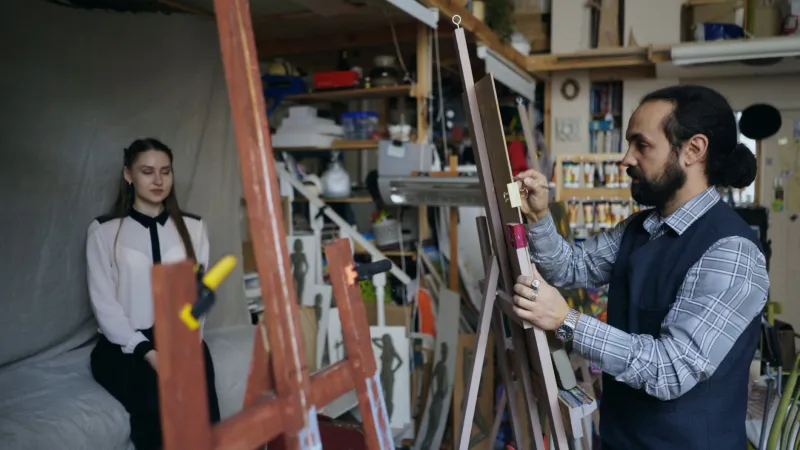
Artists who walk through their process on camera, who explain why their studio is set up the way it is, who talk about the tools they've tried and abandoned and the ones they've come back to repeatedly—these artists are building an audience of learners alongside their audience of admirers. And learners are often more deeply engaged than passive followers.
This doesn't mean every artist needs to become a teacher. But the studio environment, documented with some degree of thoughtfulness, naturally invites questions that lead to conversation. And conversation is where community gets built.
For artists who eventually want to monetize through workshops, courses, or mentorship—or who simply want a more interactive relationship with their audience—the studio is the most natural starting point for that kind of engagement.
Digital Studios Count Too
It's worth noting that not every artist works in a physical space that photographs beautifully, and not every creative practice produces the kind of material environment we usually picture when we say "studio."
Digital artists, illustrators, musicians working in home setups, performers who create in rented rehearsal spaces—all of these practitioners have a version of the studio story to tell. The screen setup, the software workflow, the reference folders, the playlist that runs during a creative session: all of it constitutes an environment, and all of it can be shared in ways that build the same kind of authentic connection.
The principle isn't about having a photogenic loft. It's about making the creative environment legible to the people who are interested in the work.
What the Space Says When You're Not Saying Anything
Here's the thing about using your studio as part of your creative identity: it keeps working even when you're not actively promoting yourself.
A well-documented studio—visible in the background of interviews, referenced in your bio, present in your social presence—communicates something quietly and continuously. It says that there is a real place where real work happens, that the creative practice has physical roots, that you take the making seriously enough to have built a space around it.
In an attention economy full of artists who exist only as a feed of finished images, that kind of groundedness stands out. The studio isn't just where the work comes from. It's part of the story you're telling about who you are as an artist.
And right now, that story matters more than ever.