Skip the Gatekeepers: 7 Ways Artists Are Building Their Own Institutions
For most of the last century, an artist's path ran through a narrow corridor: get chosen. Chosen by a gallery, a curator, an A&R rep, a festival programmer. The institutions held the keys, and artists spent years auditioning for a handshake.
That corridor still exists, but it's no longer the only route. A growing wave of American artists is building their own infrastructure — venues, audiences, and reputations that don't require anyone's permission. Here are seven models worth stealing from.
1. Turn Your Living Room Into a Gallery
The house show is having a renaissance. Painters in Chicago are converting garages into one-weekend galleries. Musicians in Nashville and Austin are running listening-room series in living rooms that sell out faster than some clubs. The overhead is nearly zero, the intimacy is unbeatable, and the collector who buys a piece off your kitchen wall becomes a patron for life.
2. Master the Pop-Up
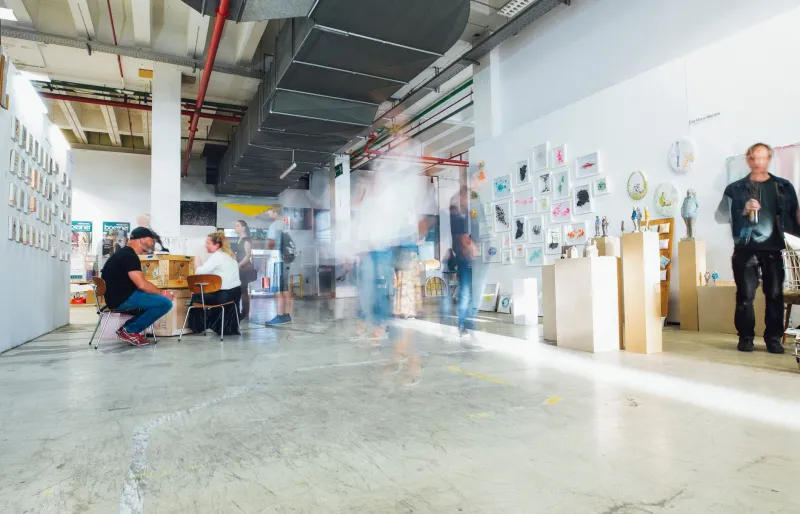
Empty storefronts are everywhere, and landlords are increasingly willing to hand them over cheap — sometimes free — for short runs. A pop-up show gives you the one thing traditional galleries rarely offer: total control. You choose the work, the wall color, the music, the guest list. Artists in Detroit and Philadelphia have used month-long pop-ups to build mailing lists of thousands before ever approaching a gallery.
3. Build a Digital Space That's Actually Yours
Social platforms are rented land; algorithms can evict you overnight. The artists playing the long game are building their own digital institutions — a simple website with a real mailing list, a paid newsletter, an online archive of their work. A thousand-person email list is worth more than fifty thousand passive followers, because you own it.
4. Take the Show on the Road
Why wait to be booked? Performers and muralists alike are creating touring formats they control — a one-person show that travels between small theaters, a mobile mural project hitting a different town each month, a poetry series that moves between bookstores across three states. Touring your own work turns 'no one booked me' into 'I booked myself twelve times.'
5. Start a Micro-Collective
One artist is easy to ignore. Eight artists sharing a mailing list, splitting booth fees at art fairs, and cross-promoting each other's shows are a movement. Collectives like these have launched everything from shared studios to full-blown alternative galleries. The collective becomes the institution — and everyone in it gets institutional credibility by association.
6. Publish Instead of Pitching
Can't get a review in the big art magazine? Publish your own. Zines, art books, and self-produced catalogs have exploded as both marketing tools and collectible works in their own right. A beautifully printed catalog of your last three shows does more for your credibility than a dozen unanswered pitch emails — and it becomes merchandise you can sell.
7. Make the Audience Part of the Institution
The smartest independent artists aren't just building audiences; they're building membership. Patreon-style patronage, collector circles, first-look lists, and annual supporter-only shows convert casual fans into stakeholders. When people feel like insiders, they don't just buy the work — they recruit for it.
The Mindset Shift
Every one of these models shares a single underlying move: replacing permission with initiative. The museum might still call someday, and that's fine. But artists who've built their own institutions report the same surprising effect — once they stopped waiting to be chosen, the institutions started paying attention.
The gate isn't locked anymore. Some artists just realized they were holding a key the whole time.